
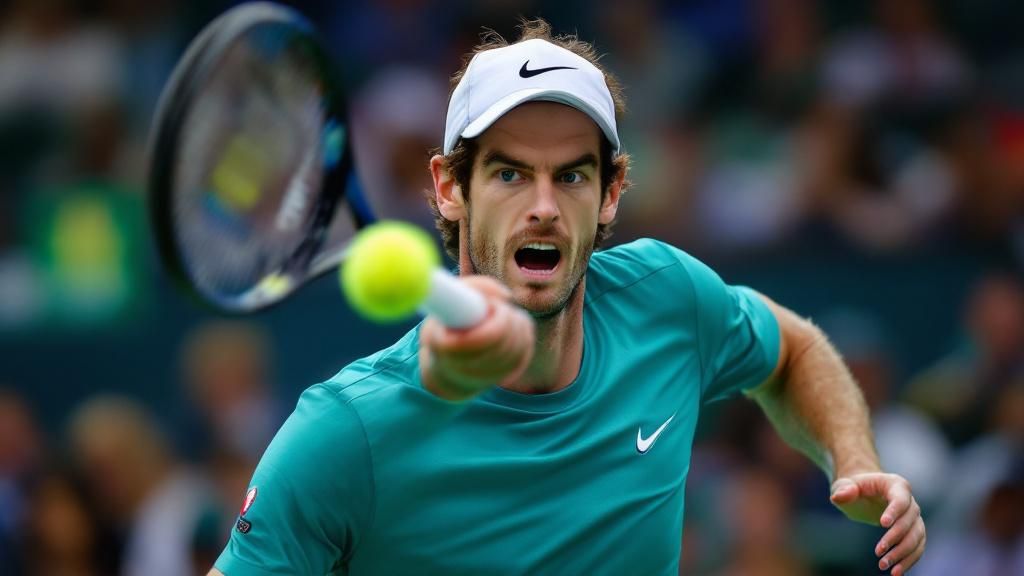
Andy Murray’s carefully orchestrated comeback to professional tennis has created ripples across the British athletics hierarchy, suggesting a likely revival for the nation’s most accomplished player. Following his career-threatening hip surgery, Murray’s measured reintroduction to competitive play promises to reconfigure the British tennis landscape, encouraging a emerging generation whilst reigniting hopes of additional major championship victories. This article examines how his careful strategy to competitive play is shaping grassroots growth, supporting rising prospects, and repositioning Britain as a competitive powerhouse in global tennis.
The Returning Champion
Andy Murray’s re-entry into professional sport represents far more than a individual accomplishment; it symbolises resilience and determination that reverberates through British sport. After enduring a career-threatening hip operation, many doubted if the three-time major winner would ever return to top-level competition. His choice to attempt a return, however, displays steadfast dedication to his game and an unconquerable determination that has defined his career. The athletics fraternity watches with genuine intrigue as Murray confronts this critical juncture, demonstrating that age and physical setbacks need not determine an athlete’s trajectory or performance goals.
The significance of Murray’s strategic return extend well beyond his personal results on court. His involvement with professional tournaments energises British tennis, offering a tangible example of resilience to junior competitors facing their own obstacles. Moreover, his return story offers invaluable lessons in emotional resilience and physical rehabilitation, establishing new benchmarks for athletic longevity. As Murray competes once more, he at the same time coaches the emerging generation, forging a bridge between established excellence and emerging talent that strengthens the complete British tennis community.
Influence on British Tennis Growth
Murray’s re-entry into professional competition has generated significant momentum within the British tennis system. His participation in top-tier events elevates the tennis profile across Britain, generating enhanced financial support in junior development initiatives and practice venues. The knock-on benefits reach past professional ranks, motivating grassroots participation and prompting national organisations to prioritise talent identification and nurturing pathways for up-and-coming British talent.
Mentorship and Guidance
Beyond his on-court displays, Murray has taken on an increasingly prominent coaching position within the British tennis community. His willingness to share expertise acquired through performing at the elite standard offers essential support to emerging talent charting their own career trajectories. This casual mentoring influence complements formal structures, delivering useful knowledge into competition readiness, psychological strength, and handling professional expectations.
Murray’s openness to rising players represents a departure from established pecking orders in professional athletics. By collaborating with talented emerging athletes, he shows dedication to the collective progress of British tennis. His coaching role goes past purely technical training, encompassing strategic career guidance, commercial arrangements, and psychological techniques crucial for maintaining sustained competitive performance at international level.
- Provides expert advice on tournament selection and planning
- Shares psychological strength techniques developed throughout professional journey
- Facilitates connections to coaching and advisory networks
- Demonstrates professional standards through reliable dedication
- Encourages balanced approach between ambition and individual health
Performance Comparison and Rankings
Murray’s return to competitive play has demonstrated remarkable resilience, with his statistical indicators revealing a player determined to reclaim his standing among the sport’s top players. Despite the constant physical pressures of professional competition, his ranking trajectory has steadily improved, demonstrating his technical proficiency and mental fortitude. His victories against established competitors have sparked renewed debate about his ability to compete for championship victories, whilst also delivering crucial information on his rehabilitation status and playing condition.
The strategic approach of Murray’s event choices has been crucial in managing his recuperation whilst maintaining competitive edge. By carefully balancing high-level competition with adequate recovery periods, he has enhanced his performance trajectory without compromising long-term sustainability. His results have galvanised British tennis enthusiasts and commentators alike, proving that prior injuries and advancing years need not diminish a player’s competitive ambitions or accomplishments at the top levels of elite competition.
Coming Prospects and Influence
Andy Murray’s calculated comeback to the professional circuit has significantly transformed views on what represents a accomplished tennis trajectory. His measured approach illustrates that extended careers and focused competition can function alongside physical limitations, offering valuable lessons to emerging competitors globally. The wider consequences of his resurgence go further than individual success; Murray’s participation on tour energises UK tennis development, generating investment and media attention formerly channelled in different directions. His impact on emerging talent illustrates how accumulated knowledge and perseverance go beyond traditional career paths, setting fresh standards for athletic perseverance.
Looking forward, Murray’s legacy will undoubtedly include more than tournament victories and ranking positions. His dedication to developing rising British players has created a lasting foundation for the coming generation of competitors aiming for international success. By combining competitive drive with coaching duties, Murray has positioned himself as both playing member and steward of British tennis’s future. This two-fold responsibility reinforces the nation’s competitive infrastructure whilst ensuring his considerable expertise benefits the sport long after his final competitive appearance, cementing his status as influential presence within British sporting history.
