
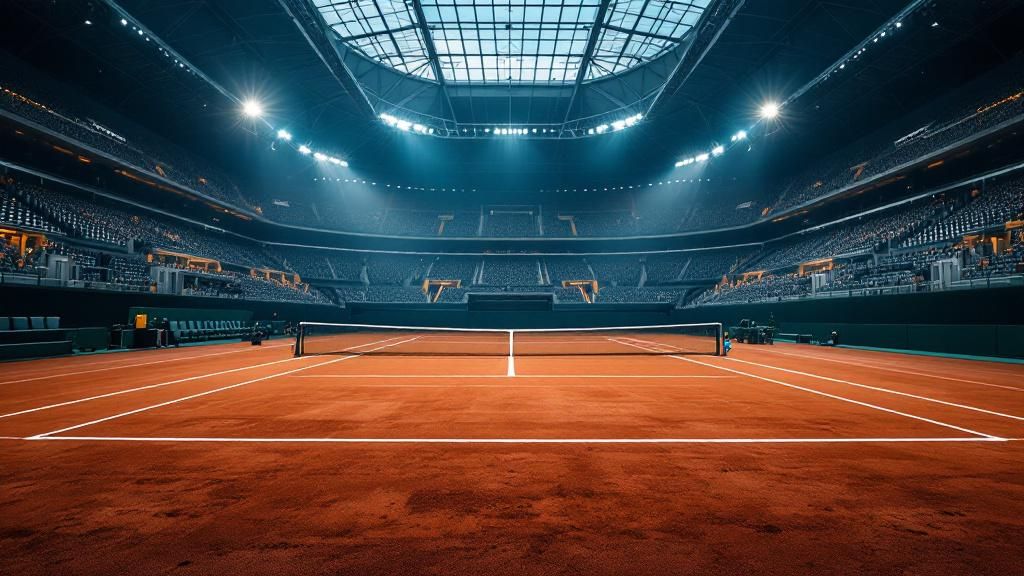
Real Madrid’s iconic Bernabeu stadium will provide a training court for the world’s top-tier tennis players ahead of the Madrid Open the following month. The renowned facility will briefly exchange grass with clay during 23-26 April, giving elite competitors including Spanish world’s top-ranked player Carlos Alcaraz an opportunity to refine their training for one of the professional game’s major events outside the Grand Slams. The practice activities, which will match the clay surfaces utilised at the tournament’s primary location, the Caja Magica, will remain open to the public. The Madrid Open, which spans 20 April to 3 May, incorporates both the ATP and WTA tours, making it one of the sport’s most prestigious unified competitions.
A arena adapted for tennis
The choice to utilise the Bernabeu constitutes an forward-thinking solution to a expanding logistical challenge confronting the Madrid Open. The tournament’s expansion to 96-player singles draws contested across a two-week period, combined with the inclusion of doubles events, has strained the capacity of the Caja Magica past its practical limits. By gaining entry to one of world football’s most recognisable stadiums, organisers have managed to cater for the tournament’s expansive development whilst preserving the standard of preparation facilities available to the world’s top players.
Tournament director Feliciano Lopez stressed that the move serves a legitimate athletic objective rather than merely functioning as a marketing exercise. “The goal is to have a proper practice court which helps them – it’s not just a marketing opportunity,” the three-time Wimbledon quarter-finalist said to BBC Sport. Lopez emphasised that since news of the arrangement broke, he has fielded multiple requests from players and coaching teams keen to utilise the facility. Real Madrid have no home fixtures scheduled during the week when their recently refurbished stadium will be transformed for tennis purposes.
- Practice sessions open to elite players between 23-26 April
- Court surfaces will accurately match the Caja Magica clay
- Public access to practice sessions is not allowed
- Tournament matches will remain solely at Caja Magica venue
Why Madrid Open needed additional facilities
The Madrid Open has experienced a substantial transformation in the past few years, transitioning from a traditional tournament into one of professional tennis’s most ambitious and innovative events. The increase to 96-player singles draws held over a fortnight, paired with the addition of extensive doubles tournaments, has produced unprecedented demand on current facilities. Tournament officials found themselves dealing with a real capacity problem at their traditional home, the Caja Magica, which could not accommodate the expanded draw whilst maintaining the high standards demanded by the leading professionals and their support staff.
This expansion illustrates the tournament’s increasing status and financial attraction within the competitive tennis schedule. As one of the leading tournaments outside the Grand Slam tournaments, the Madrid Open attracts the sport’s top players and generates considerable worldwide engagement. However, this accomplishment led to a contradiction: the very acclaim that rendered the tournament so valuable also strained its physical resources. Tournament director Feliciano Lopez understood that innovative solutions were crucial to preserve the event’s momentum and keep drawing top-tier participation from both ATP and WTA participants.
Outgrowing the original venue
The Caja Magica, located approximately five miles to the south of central Madrid, has served as the Madrid Open’s home for years. However, the venue’s constraints became more obvious as the tournament broadened its reach and ambition. The facility, whilst adequate for the tournament’s established structure, struggled to provide sufficient practice courts and coaching facilities for the dramatically enlarged player base now competing in the event. This constraint had the potential to damage the calibre of training accessible to competitors.
By securing access to the Bernabeu, organisers have effectively solved this operational challenge whilst at the same time creating substantial promotional benefits. The celebrated football venue’s conversion to a tennis installation demonstrates creative problem-solving at the most senior operational tier. The setup enables the event to preserve its competitive standards and athlete contentment whilst maintaining its expansive expansion path, ensuring the event stays among elite tennis’s most prized and well-resourced tournaments.
Real Madrid’s athletic aspirations expand
Real Madrid’s decision to host a practice court at the Bernabeu represents a deliberate broadening of the club’s sporting portfolio past traditional football. The 15-time European Cup winners have displayed their willingness to embrace creative collaborations that elevate their celebrated ground’s international standing. By attracting the world’s top tennis competitors to one of sport’s most iconic locations, Real Madrid has presented itself as a innovative club equipped to stage premier competitions across various sports. This move fits with the club’s broader vision of the Bernabeu as a versatile sports venue, in the wake of its recently completed renovation that converted it to a modern, world-class stadium.
The arrangement carries limited disruption to Real Madrid’s fixture list, as the club has strategically timed the court construction to avoid major domestic fixtures. Should Real Madrid progress through the quarter-final stage against Bayern Munich, any following encounters with Liverpool or Paris St-Germain would be contested away during the relevant period. This meticulous planning ensures the club’s competitive interests remain uncompromised whilst continuing to exploit the business and marketing prospects presented by hosting one of tennis’s premier tournaments. The collaboration illustrates the way modern sports organisations can utilise their venues and brand recognition to strengthen their position within the wider sports landscape.
| Feature | Details |
|---|---|
| Practice court dates | 23–26 April 2026 |
| Tournament dates | 20 April – 3 May 2026 |
| Court surface | Clay, matching Caja Magica specifications |
| Public access | Not open to spectators |
Tournament director Feliciano Lopez has been insistent that this arrangement represents a legitimate competitive venture rather than a surface-level promotional undertaking. The former world number 13 has attracted substantial engagement from competitors and coaching staff keen to utilise the Bernabeu’s practice facilities during their Madrid Open preparations. Lopez’s vision focuses on concrete value for competitors, ensuring the partnership supports the competition’s sporting standards and athlete wellbeing above all other factors.
Innovative marketing approach meets practical purpose
The Madrid Open has firmly positioned itself as a competition keen to challenge boundaries and challenge convention within the professional game. From introducing an eye-catching blue clay surface to using fashion models as ball persons, the tournament has consistently sought to capture global attention through creative ventures. Director Feliciano Lopez has emphasised that the event takes pride in pioneering methods and embracing strategic risk-taking to deliver fresh opportunities for fans and players alike. This latest project at the Bernabeu marks the logical progression of that approach, blending the legendary stadium’s global profile with genuine performance advantages.
Beneath the prestigious surface of hosting matches at one of global tennis’s most prestigious venues lies a genuine requirement driving the decision. The Madrid Open’s expansion to 96-competitor singles draws contested over a two-week period, alongside comprehensive doubles competitions, has quickly exceeded the Caja Magica’s capacity. By utilising the Bernabeu’s expansive facilities for player preparation, organisers address genuine logistical constraints whilst simultaneously generating substantial marketing value. This two-pronged strategy ensures the partnership delivers tangible advantages to competitors rather than functioning purely as a promotional exercise removed from sporting reality.
- Blue clay surface implemented to improve the visual presentation and television presentation
- Fashion models assigned as ball kids during recent tournament editions
- Virtual tournament conducted during the 2020 pandemic on gaming consoles
- Tournament expansion demands additional facilities exceeding Caja Magica capacity
- Practice court installation meets player training requirements authentically
Exploring prospects for tennis at the Bernabeu
Whilst the existing arrangement is limited to practice facilities, the positive outcome of this first partnership could conceivably reshape how the Madrid Open functions in the years ahead. Tournament director Lopez has been careful to temper expectations, stating that hosting competitive fixtures at the Bernabeu continues to be outside the organisation’s short-term plans. However, the example established by other major tournaments must not be entirely dismissed. The Miami Open’s incorporation of a display court within the Hard Rock Stadium shows that such arrangements are viable at elite sporting venues, should circumstances and logistics prove conducive in subsequent editions.
For now, the priority remains firmly on offering measurable advantages to the internationally prominent athletes during the crucial training stage before the primary competition commences at the Caja Magica. The access of a elite-level practice venue at one of the world’s most recognisable stadiums provides an remarkable chance for competitors to refine their clay-court techniques. Whether this proves a standalone showcase or the foundation for a longer-term arrangement will ultimately hinge on how well the initiative meets athlete demands whilst preserving the tournament’s reputation for creativity and excellence.
